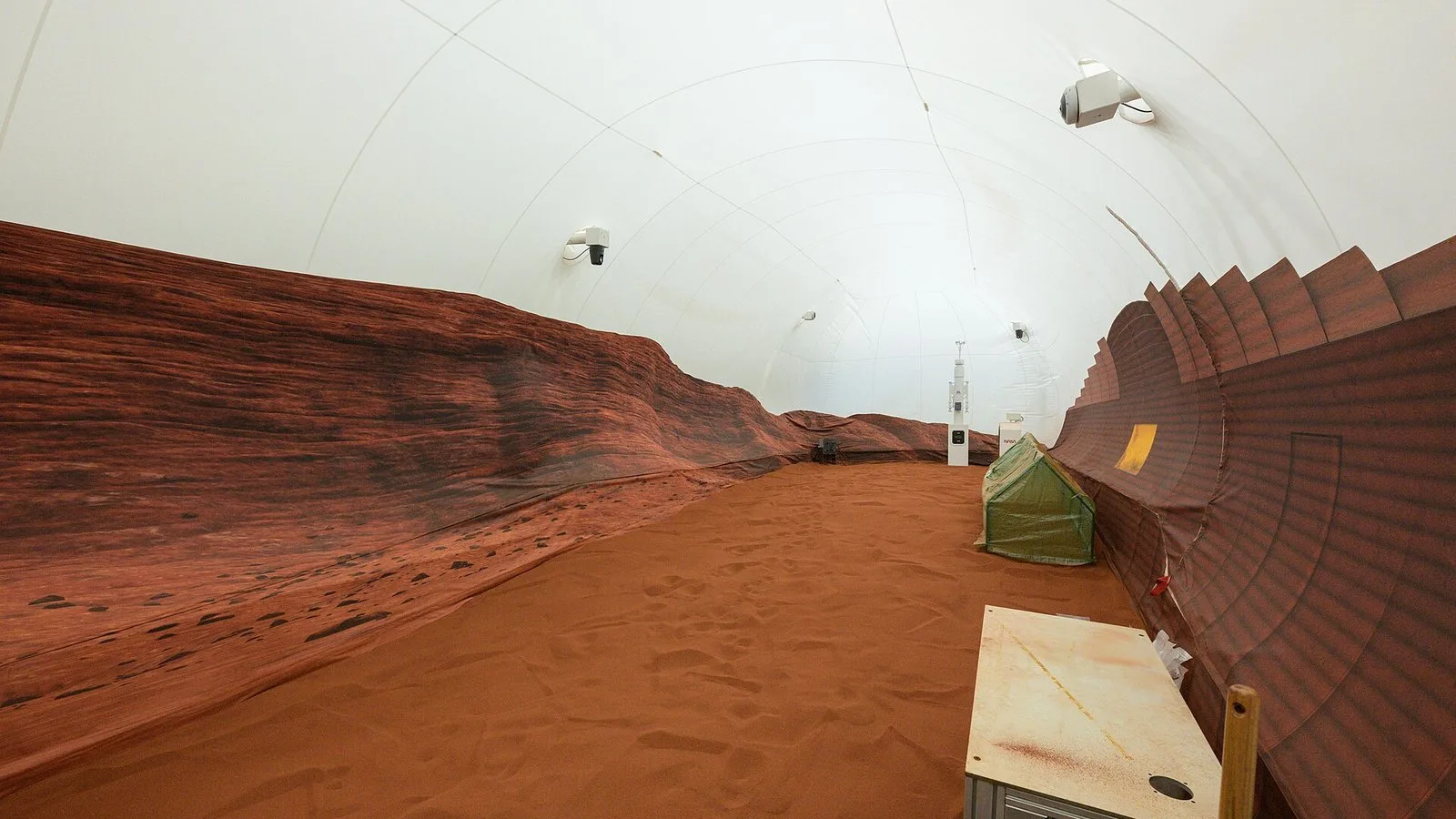
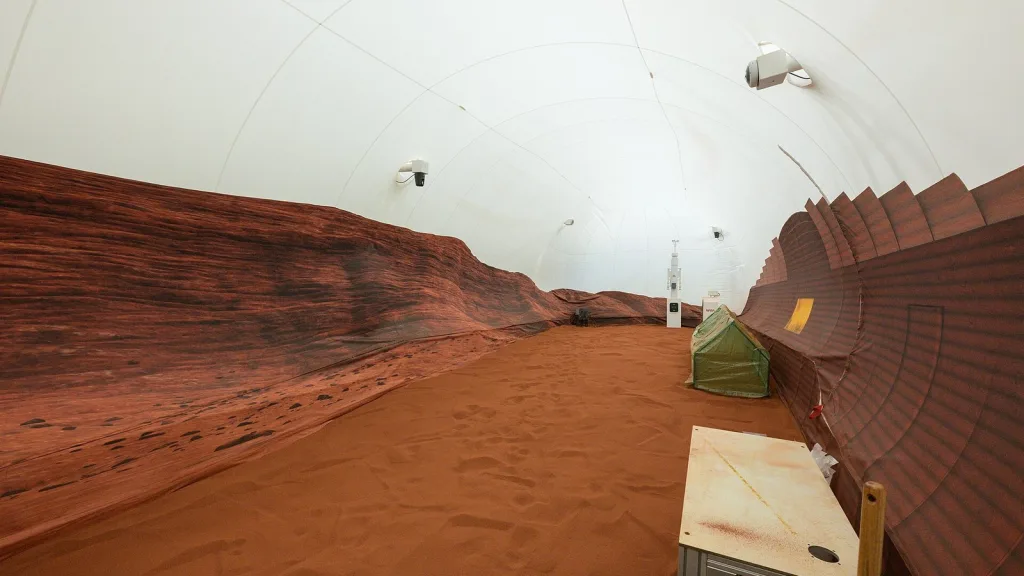
Ross Elder’s year in Houston was spent inside. NASA named him commander of CHAPEA Mission 2, a 378-day analog stay in a Mars-like habitat at Johnson Space Center. The agency said on Nov. 9, 2026, that the crew had completed the mission; ABC13 reported their exit on Nov. 12.
Elder is not, in NASA’s description of this project, an astronaut assigned to a flight. CHAPEA crews are volunteers who agree to be studied while they live under mission-like constraints: a closed habitat, a limited menu, delayed communications, a small group of colleagues who cannot leave. Command in that setting is a daily job — schedules, morale, the unglamorous work of keeping a tiny household functioning — not a cockpit task.
Public information about the crew is what NASA has chosen to publish. This newspaper is not going to fill the silence with invented personality details, family anecdotes or quotes. The facts that matter for a local reader are already on the record: a named commander, a 378-day clock, a habitat at Johnson, and a hatch that opened this month.
Analog missions are easy to treat as a novelty. They are also a research method. If NASA wants to know how a crew holds up on the way to Mars, it has to start with people who will let the agency watch them get through a year without a real planet at the door. Elder agreed to be one of those people, in a building most drivers on NASA Parkway will never see.
Sources: NASA CHAPEA Mission 2 updates, including the Nov. 9, 2026, completion notice naming commander Ross Elder; ABC13, Nov. 12, 2026.