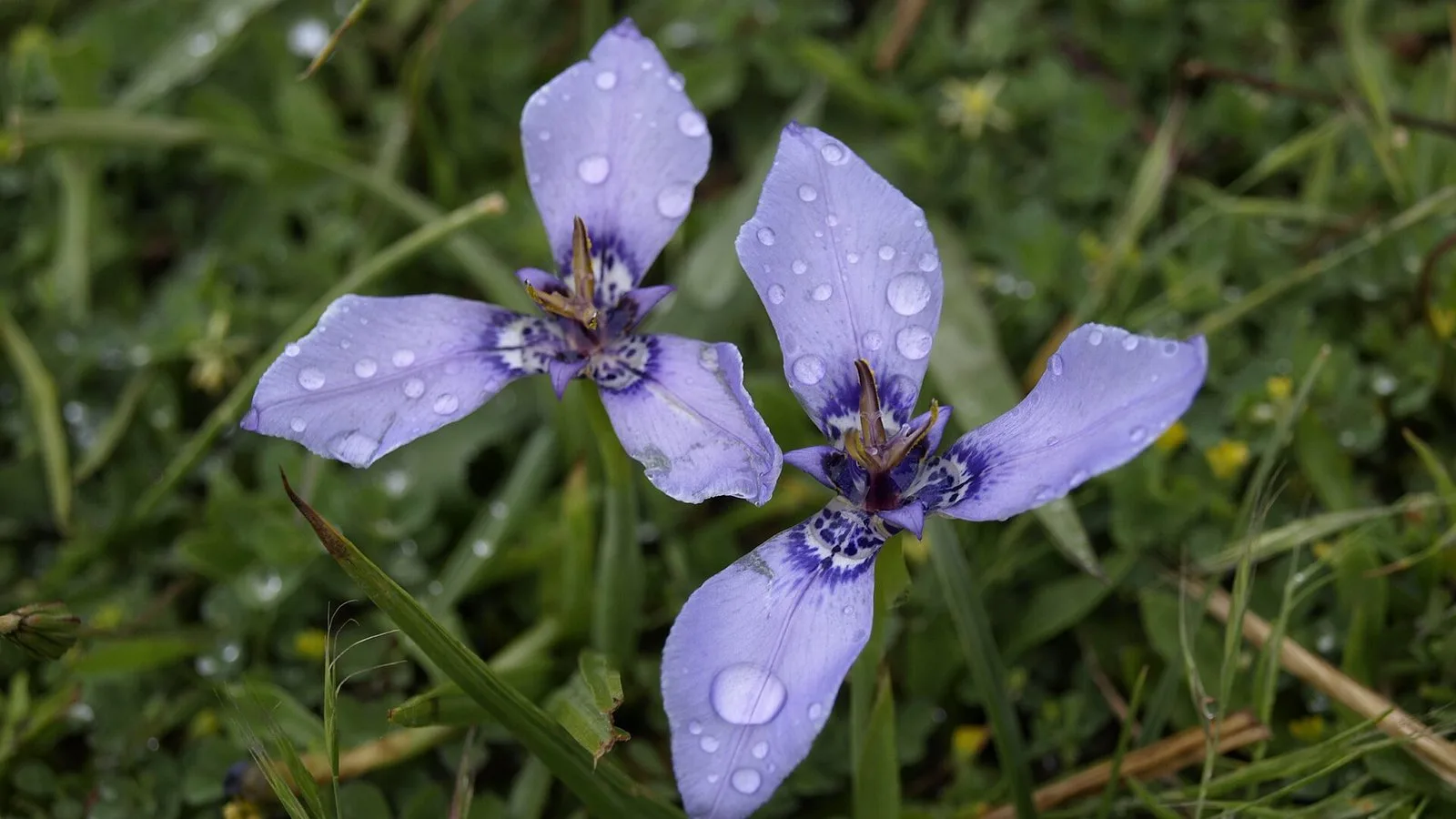
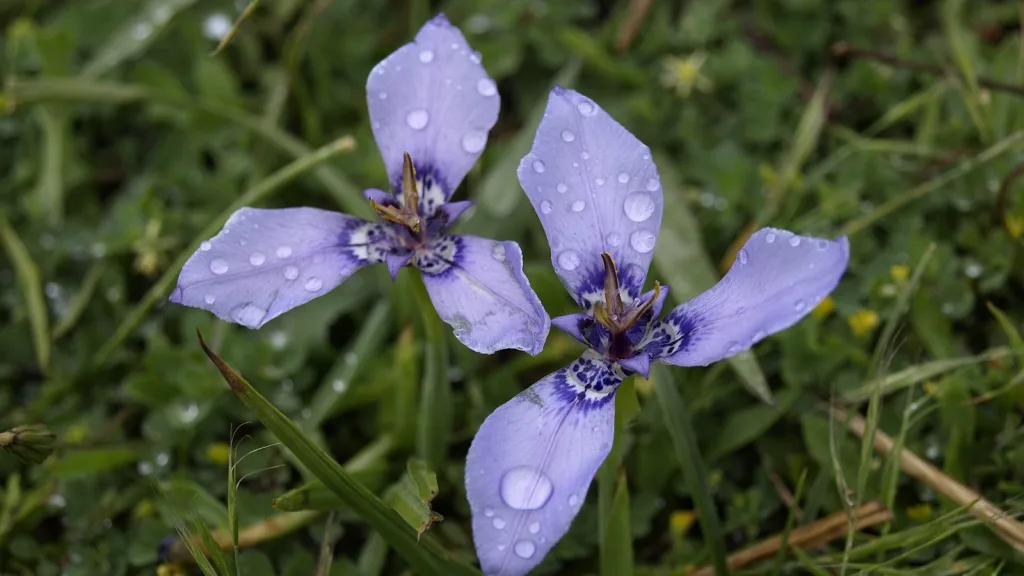
Herbertia lahue, sometimes called prairie nymph or prairienymph, is a small iris-family plant native to the Gulf Coast, including Texas. It sends up fleeting blue-violet flowers, often in spring, and then disappears back into foliage or dormancy in a way that makes it easy to miss if you only garden on weekends. Native-plant and Extension references treat it as a bulb or corm for naturalistic beds, not as a florist’s iris.
The historic headline at this address used the scientific name, which is still the right way to look it up, because common names wander. In a Bay Area yard it wants sun to part sun and a soil that is not a puddle in July. It is more at home in a remnant-prairie planting or a lightly managed bed than in a formal, heavily irrigated row. Like a lot of small native irises, it can be lost to enthusiastic weeding if someone does not mark the spot.
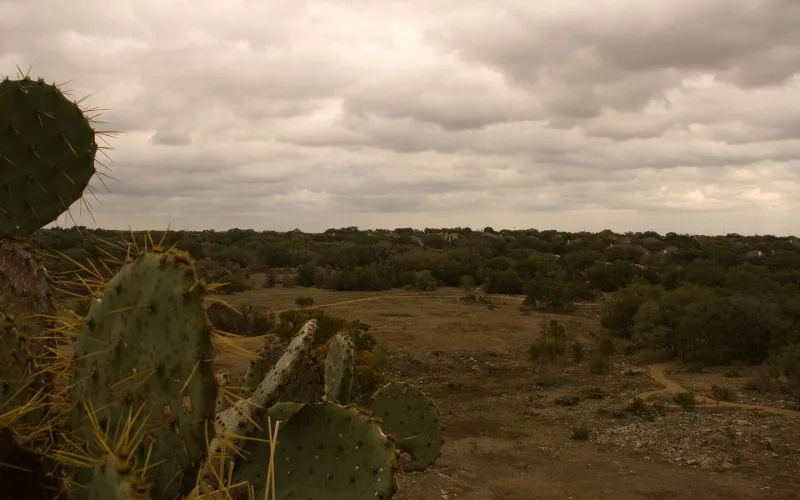
This is not a plant that will fill a mailbox-magazine cover. It is a plant that tells you something about where we live: the coastal prairie had a spring flora of its own, and some of it can still be grown, carefully, a few miles from San Jacinto and the bay. For current identification and source lists, the Lady Bird Johnson Wildflower Center’s plant database and Texas native-plant society materials are the right references.
The restored page is a short, sourced note, not a nursery catalog and not a copy of an old column.
Sources: Native-plant and Extension references on Herbertia lahue (prairie nymph), including the Lady Bird Johnson Wildflower Center plant database and Texas Gulf Coast native-plant guides.