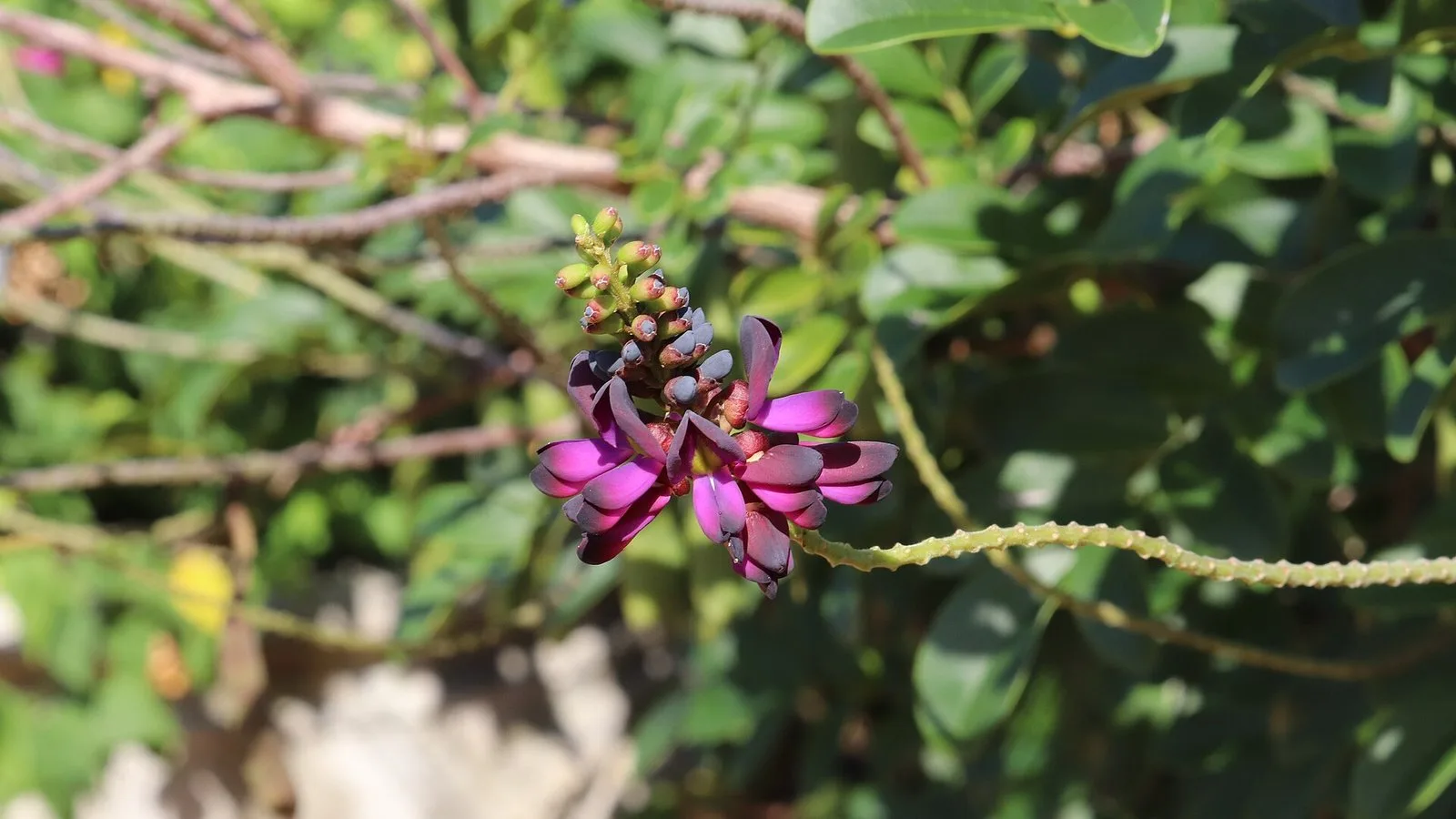
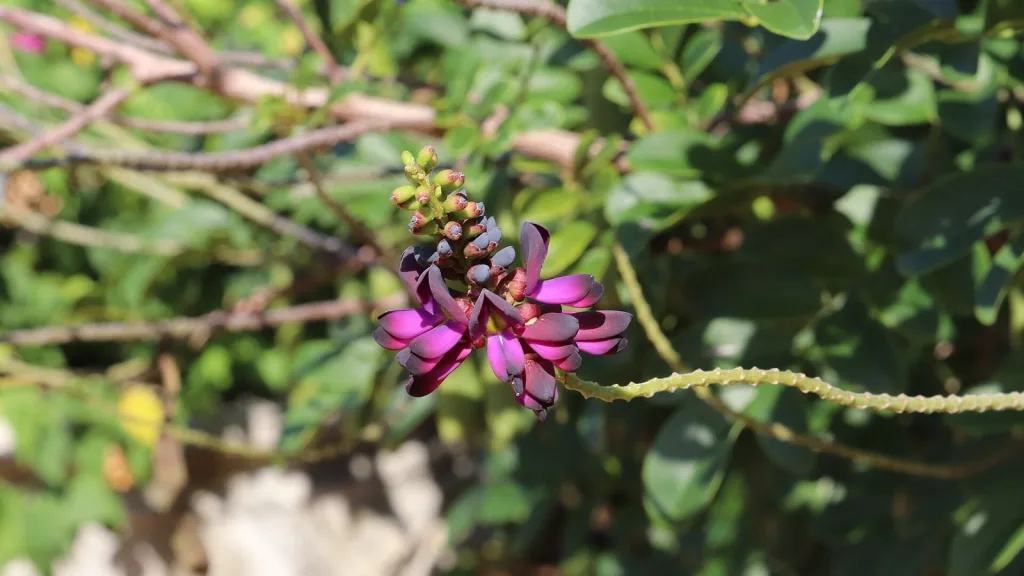
Evergreen wisteria is one of those nursery-tag names that needs a footnote. The plant most often sold under that label in Texas is Millettia reticulata, sometimes listed as Callerya reticulata, and it is not a true Wisteria. It is a legume vine with glossy leaves, a late flush of purple-red flowers, and a reputation, backed by Texas A&M AgriLife and Extension guidance on Gulf Coast vines, for taking heat that would punish some of the more famous Chinese and Japanese wisterias.
“Evergreen” is a relative word on Galveston Bay. In a mild winter the vine can hold a lot of its foliage. In a harder freeze it will drop leaves and look dead until spring. That is normal. The plant is generally hardy in the Houston area, and it is used on fences, arbors and the kind of chain-link screens people would rather not stare at in August.
Gardeners should still plant it with the same respect they would give any strong vine. It needs a structure, sun, and occasional pruning so it does not swallow a gutter. It is not the plant to put against a weak trellis and forget. It is also not invasive in the same way some true wisterias have been, but “not as bad as the other one” is not a license to dump trimmings in a bayou.
This is a fresh garden column at a historic address, not a reprint of a vanished clipping. For planting dates, soil advice and cultivar names, Texas A&M AgriLife Extension and the Harris County master gardener resources are the right next stop.
Sources: Texas A&M AgriLife Extension and related Gulf Coast horticultural guidance on Millettia / Callerya reticulata (evergreen wisteria) and vine selection for the Houston area.